Canning at Altitude: Why Time or Pressure Must Change
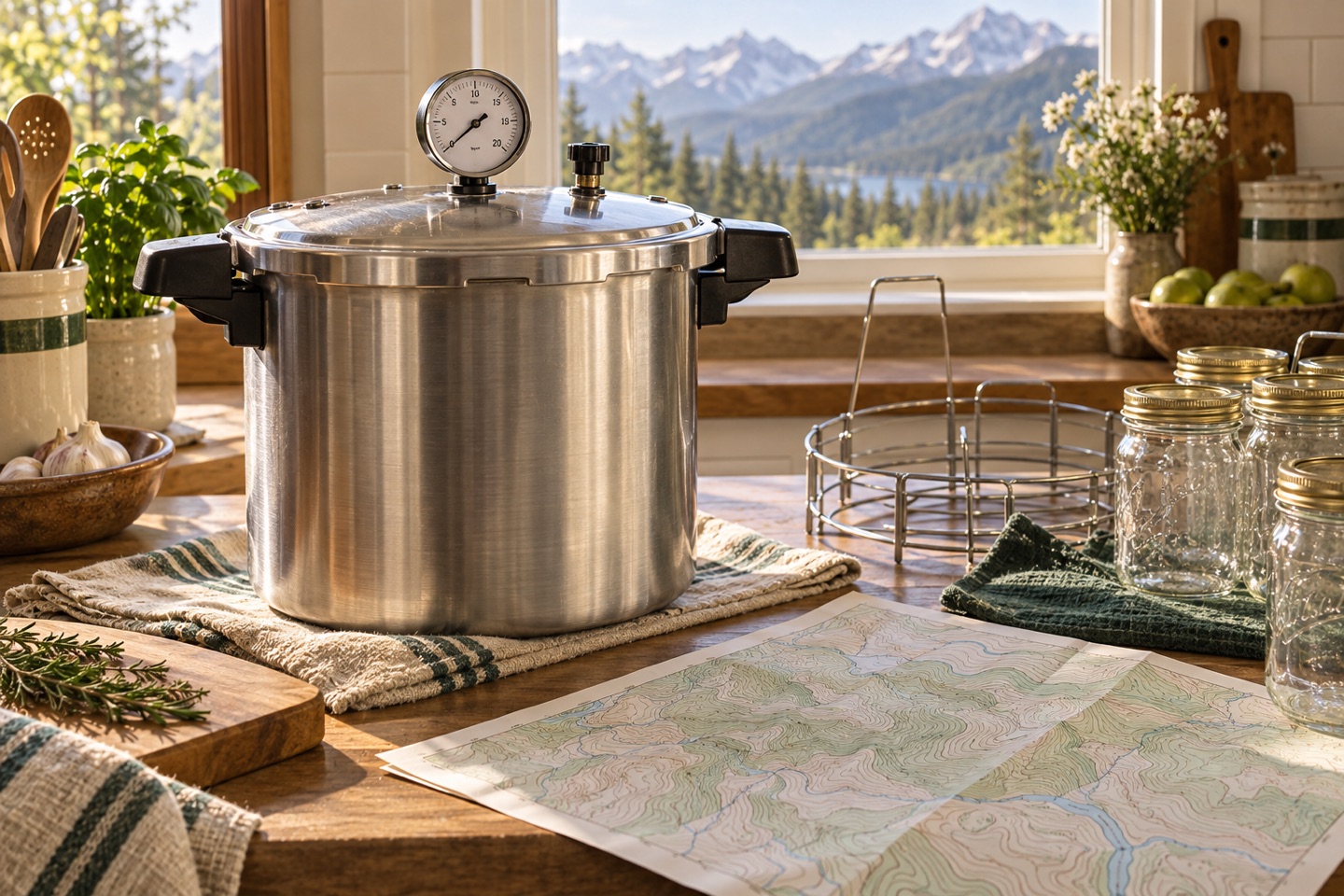
Elevation belongs on the prep list with jar size and processing time. As elevation rises, atmospheric pressure falls and water boils at a lower temperature. A sea-level process therefore cannot simply be used unchanged in a higher kitchen.
Boiling-water processes usually add time
For boiling-water canning, tested recipes provide longer processing times at higher elevations. The extra time compensates for the lower boiling temperature. Use the elevation bands in the specific recipe rather than adding an amount from memory.
NCHFP notes that adjustments generally begin above 1,000 feet. Find the elevation of the place where the canner sits—not the elevation of the nearest city or the farm where the produce grew.
Pressure processes increase pressure
For pressure canning, the required pressure rises with elevation so the canner can reach the necessary temperature. The correct setting also depends on whether the canner uses a dial gauge or weighted gauge. Use the table attached to the tested process.
Do not shorten the processing time because pressure is higher. Time and pressure work together as specified. Vent the canner for the required period, maintain the target pressure, and allow natural depressurization. Cooling a canner with water or forcing it open can cause seal failures and does not follow the tested process.
Find a dependable elevation
County GIS tools, local planning offices, and land-grant Extension offices can help identify elevation. If the property spans a steep slope, use the kitchen location. When the value falls close to the next adjustment band, confirm it rather than guessing downward.
Check the gauge and write down the setting
Dial gauges can drift and should be checked according to the manufacturer or local Extension guidance. Weighted gauges work differently but the canner still needs routine inspection. Review the gasket, vent, safety plug, rack, and lid following the equipment manual.
Write the elevation and the correct setting on a card kept with the canner. Recheck after moving. A small note made on a quiet day is more reliable than trying to reconstruct the rule while jars are waiting.
Use this article to understand the process, then follow a current tested recipe for the exact food and jar size. When official instructions or an equipment manual differ from this summary, follow the current official instructions.