After the Canner: Check Seals and Store Jars Safely
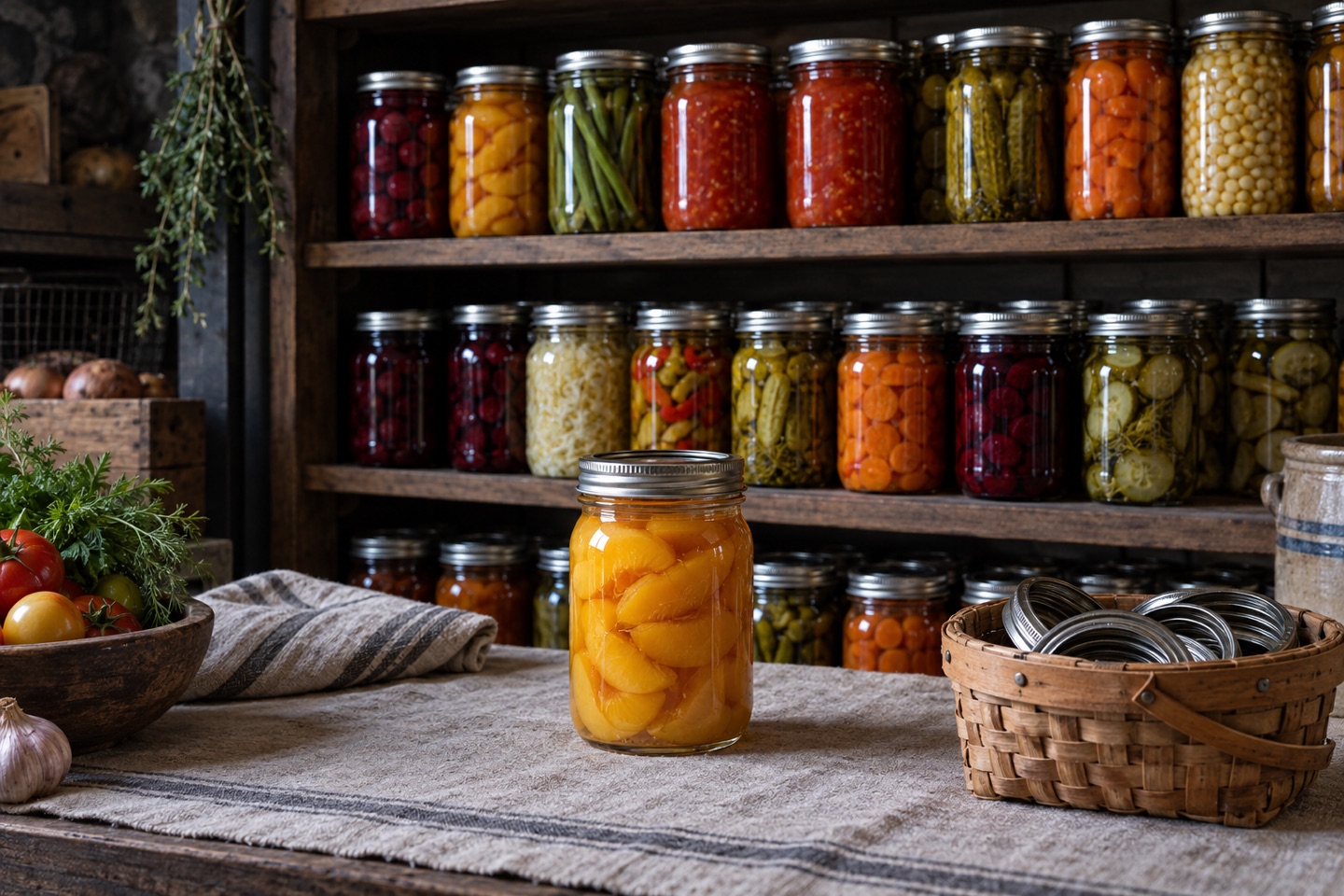
The process is not finished when the heat turns off. Natural cooling, seal checks, labels, and storage conditions all help protect the work already done. Give the jars time and resist the urge to tighten lids or hurry the cooling step.
Let the tested cooling process finish
Follow the recipe and canner instructions for removing jars. Keep them upright and place them where they will not be bumped or exposed to a cold draft. Do not retighten bands. Leave the jars undisturbed for the time given by the trusted source before checking seals.
Check the seal before the jar goes to the pantry
After cooling, remove the screw bands and check each lid using the method recommended by NCHFP or the lid manufacturer. A lid should be concave and remain attached when checked correctly. Wash residue from the jar, dry it, and label it with the food and date.
An unsealed jar is not automatically safe to reprocess. Reprocessing is an option only when the original recipe was tested, the first process was followed correctly, the problem is discovered within the permitted time, and the food is reprocessed according to current directions. Otherwise refrigerate promptly when appropriate or discard it.
Store jars cool, clean, and dark
CDC recommends a clean, cool, dark location and identifies 50°F to 70°F as best for quality. Avoid direct sunlight, damp areas, hot pipes, ranges, furnaces, uninsulated attics, and temperatures above 95°F. Store only the amount expected to be used within about a year unless the tested directions say otherwise.
Leaving screw bands off makes leaks and failed seals easier to notice and prevents a loose lid from being held in place. Do not stack jars unless the jar or lid manufacturer provides a method that protects the seal.
Never taste a suspicious jar
CDC warns that botulinum toxin cannot be seen, smelled, or tasted. Never sample a jar to decide whether it is safe. A leaking, bulging, swollen, cracked, damaged, spurting, foaming, discolored, moldy, or bad-smelling container should be discarded using current official guidance.
When the history of a jar is unknown—or the food was canned with an untested method—do not eat it. A clean shelf begins with a process you can document.
Use this article to understand the process, then follow a current tested recipe for the exact food and jar size. When official instructions or an equipment manual differ from this summary, follow the current official instructions.