How to Find a Tested Canning Recipe—and Know What Not to Change
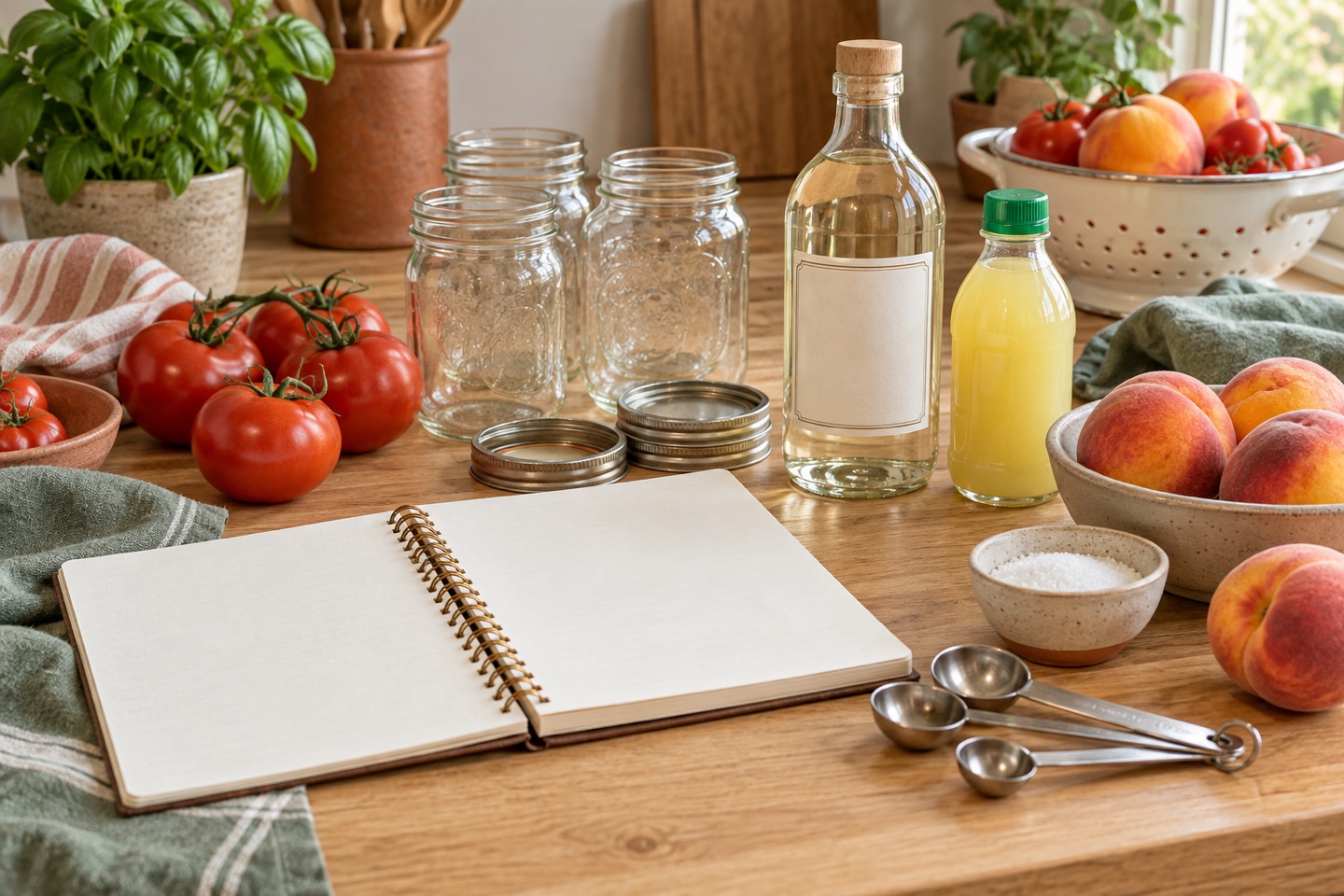
A polished recipe card can still be unsafe. For shelf-stable home canning, “tested” means that qualified researchers developed or evaluated the process so the contents receive enough heat under defined conditions. Ratings, family history, and a successful seal do not provide that evidence.
Begin with sources that publish research-based processes
Use the National Center for Home Food Preservation, the USDA Complete Guide to Home Canning, or a land-grant university Extension program. These sources explain the method and give the processing table, including changes for elevation.
Check the publication or review date when one is shown. If an older cookbook conflicts with current official guidance, use the current guidance. Equipment, ingredient acidity, and safety recommendations can change.
Match every condition in the recipe
Before buying produce, confirm the food variety or preparation, raw or hot pack, jar size, headspace, canner type, processing time, and altitude adjustment. For a pressure process, note whether the table is written for a dial-gauge or weighted-gauge canner.
Read the whole recipe once. Processing time often assumes a specific sequence and hot-fill temperature. Starting with cooler food or letting filled jars sit while another batch is prepared may change the process.
Know which changes need a different preservation method
Do not add extra vegetables, meat, starch, flour, rice, pasta, oil, or dairy unless the tested recipe includes them. Do not thicken a soup or sauce before canning unless directed. Do not replace bottled acid with an unmeasured squeeze of fresh citrus. Changes in acidity, density, and the ratio of solids to liquid affect heat penetration.
Some small flavor changes may be permitted by a specific trusted source, but the permission must come with that recipe. Treat a general internet list of “safe substitutions” cautiously when it does not identify the process being discussed.
Keep a working record
Print the recipe or save the exact link and access date. Write down the product, jar size, pack style, elevation adjustment, batch date, and yield. A brief record makes the next batch easier and helps prevent details from drifting over time.
If you cannot verify a process, choose freezing, drying, refrigeration, or a tested recipe that produces a similar result. The goal is good food on the shelf without asking a jar lid to prove something it cannot.
Use this article to understand the process, then follow a current tested recipe for the exact food and jar size. When official instructions or an equipment manual differ from this summary, follow the current official instructions.