Water-Bath vs. Pressure Canning: Choose the Safe Method
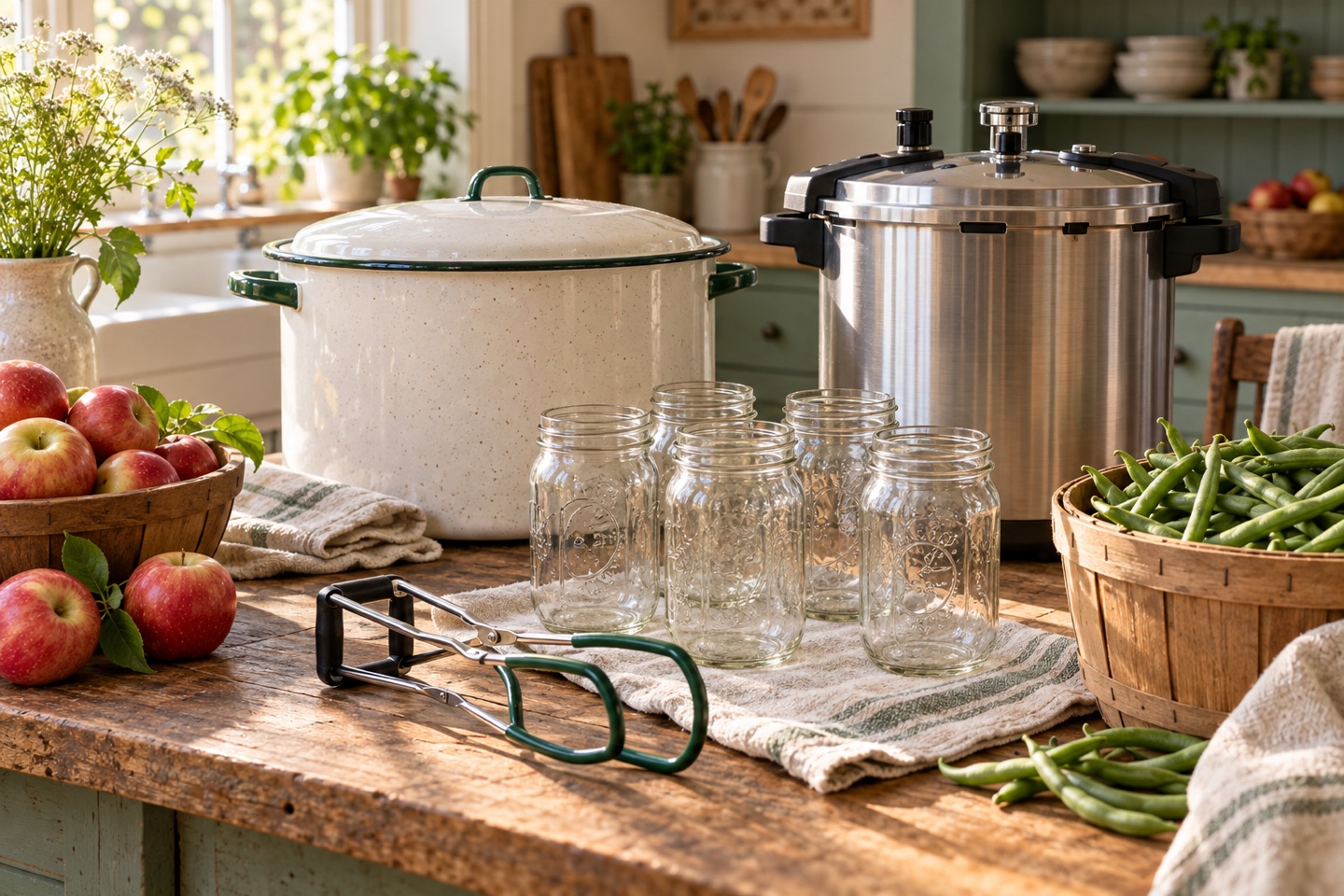
The safest way to choose a canner begins with the food, not the equipment already in the cupboard. Acidity determines which process can control the microorganisms of concern. Texture, jar size, pack style, and elevation then affect the tested process.
Use boiling water for properly acid foods
Most fruits, jams, jellies, pickles, and other properly acidified foods can be processed with a boiling-water canner when a current tested recipe says to use one. Tomatoes sit close enough to the dividing line that tested recipes commonly require bottled lemon juice or citric acid. Follow the acid amount in the recipe even when the tomatoes taste tart.
The National Center for Home Food Preservation explains that acid foods have a pH of 4.6 or lower. Boiling-water processing can control the organisms of concern in these foods when the recipe, jar size, processing time, and elevation adjustment are followed.
Use a pressure canner for low-acid foods
Vegetables, meat, poultry, seafood, and most mixtures of acid and low-acid ingredients require pressure canning. A pressure canner reaches temperatures above boiling water. That higher temperature is necessary to manage the botulism risk in low-acid food.
A pressure cooker or electric multicooker is not automatically a pressure canner. CDC recommends a canner large enough to hold at least four upright quart jars and specifically warns against relying on electric multicookers for low-acid canning. Start with the equipment specified by the tested process and its manufacturer.
A recipe is a process, not an ingredient list
Changing the size of the pieces, thickening a sauce, pureeing a vegetable, adding extra low-acid ingredients, or switching jar sizes can change how heat reaches the coldest part of the jar. A sealed lid only shows that a vacuum formed; it does not prove the food received a safe heat process.
Use the exact preparation, headspace, jar size, pack style, time, pressure, and cooling method in the tested directions. If the combination you want is not covered, freeze, refrigerate, or make a smaller fresh batch instead of inventing a canning process.
Make the choice before harvest day
- Find a current recipe from USDA, NCHFP, or a land-grant Extension service.
- Confirm that it covers your food, preparation, and jar size.
- Note the required canner and elevation adjustment.
- Read the equipment manual and inspect the canner before starting.
- Set aside enough uninterrupted time for processing and natural cooling.
When a family recipe does not match a tested process, keep the flavor tradition on the table and use a tested version for the shelf. Safety is part of preserving the harvest well.
Use this article to understand the process, then follow a current tested recipe for the exact food and jar size. When official instructions or an equipment manual differ from this summary, follow the current official instructions.