Canning pumpkin and winter squash: keep the cubes, freeze the purée
A pressure canner does not make every thick food safe. The tested home-canning method for pumpkin and winter squash depends on peeled one-inch cubes surrounded by liquid. Purée, pie filling, and pumpkin butter are different products with different heat-flow problems.
The jar can seal and the process can still be wrong
A lid seals when pressure inside a cooling jar falls and pulls the lid down. That tells you a vacuum formed. It does not tell you that the coldest part of a thick food reached the temperature and time required by a tested process. Pumpkin and winter squash are low-acid foods, so a boiling-water canner is not an option for plain squash. A current, research-tested pressure-canning process is required.
The problem becomes harder after squash is mashed. Variety, maturity, cooking method, and the amount of moisture left in the flesh can change the purée's thickness. The National Center for Home Food Preservation explains that pumpkin products also vary in acidity and water activity. When those factors vary, a single home-canning process cannot be calculated with confidence.
Why thickness changes the answer
Heat moves through a jar of liquid and separate food pieces differently than it moves through a dense, uniform purée. Cubes surrounded by hot liquid leave a predictable path for circulating heat. Purée can be much thicker, and the center of the jar may heat more slowly. A longer improvised processing time is not a substitute for laboratory testing because the slowest-heating point and the range of real-world thicknesses still have to be established.
This is why older instructions can conflict with current ones. NCHFP notes that earlier home-canning recommendations for mashed winter squash were withdrawn. The USDA guide now includes the direct caution not to mash or purée. A family recipe, an old booklet, a viral video, or a sealed commercial jar does not replace the current home-canning process.
The tested pathway is specific
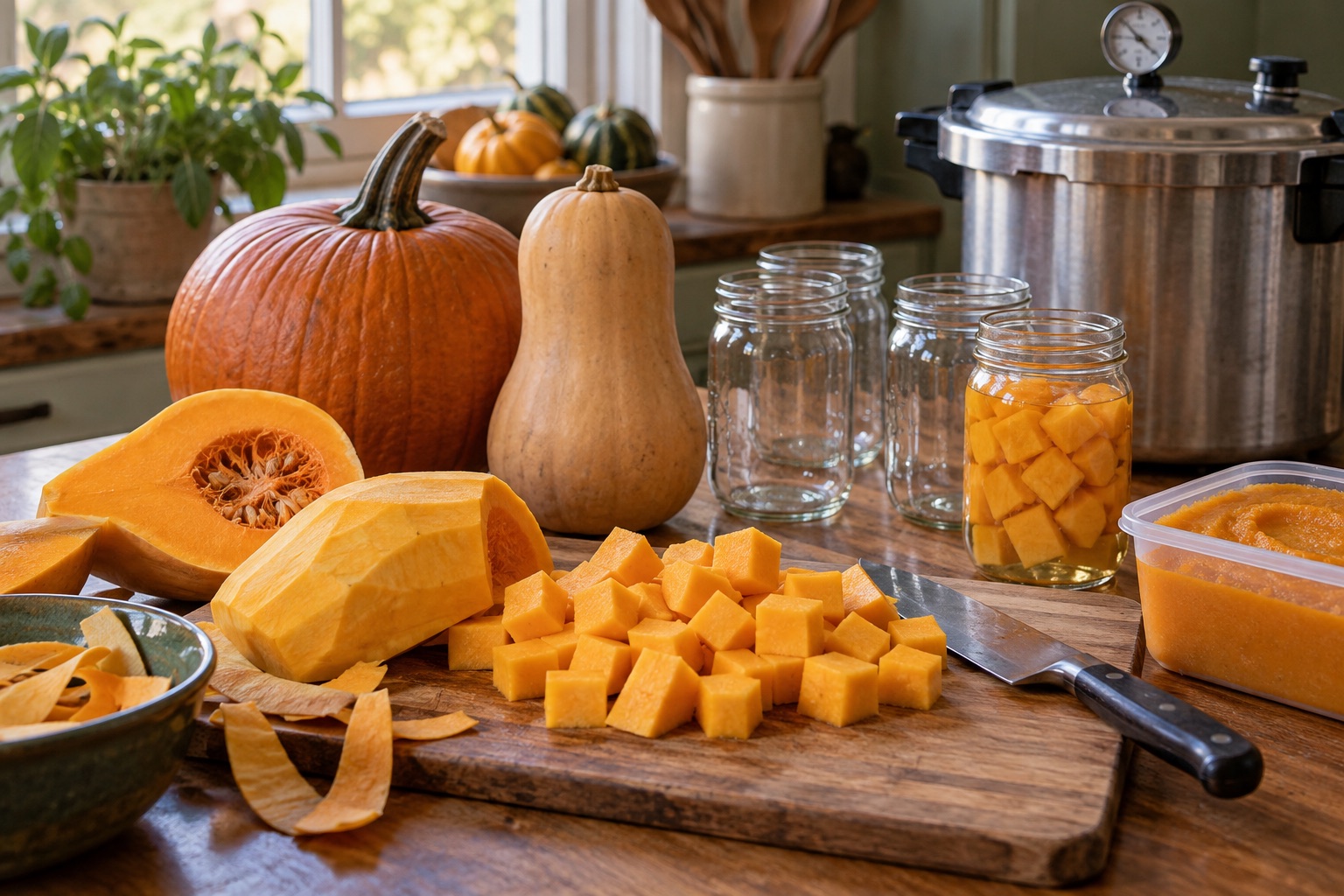
The USDA/NCHFP method begins with mature pumpkin or winter squash that has a hard rind and good-quality, stringless flesh. Small sugar or pie pumpkins are listed as producing a better-quality canned product. The method then calls for washing, removing seeds, cutting the squash into one-inch-wide slices, peeling, and cutting the flesh into one-inch cubes.
The cubes are boiled in water for two minutes, then packed hot with the cooking liquid, leaving the stated one-inch headspace. Jars are processed in a pressure canner using the current table for the exact jar size, canner type, and altitude. Do not turn the summary in this article into a recipe card: open the current source while you work and follow its full preparation, venting, pressure, timing, cooling, and jar-handling directions.
What to do when your goal is pie or soup
If you want a smooth pie filling, soup base, or pumpkin butter, freeze the finished purée instead of canning it. Pennsylvania State University Extension recommends freezing homemade pumpkin or squash purée and identifies pressure-canned cubes as the only tested canning option. Cool cooked purée promptly, portion it in freezer-safe containers with the appropriate expansion space, label it, and freeze according to current freezer guidance.
The other route is to pressure-can plain cubes using the tested method, then drain and purée the cubes after opening the jar. That keeps the canning step inside the tested conditions and moves the texture change to serving day. Expect the flavor and consistency to differ from fresh-roasted purée; plan the recipe around the product you actually preserved.
Pumpkin butter is not apple butter
The word “butter” describes a spreadable texture, not a single preservation category. Tested apple and other fruit-butter recipes rely on the fruit, acidity, formulation, and process specified in that recipe. Pumpkin and winter squash do not inherit those conditions just because the finished spread looks similar.
NCHFP reports wide variation in the pH, viscosity, and water activity of pumpkin butters. Sugar alone does not provide a dependable safety margin, and adding an untested quantity of vinegar or lemon juice does not create a validated process. University of California Cooperative Extension reiterated in 2026 that there is no safe method for home-canning pumpkin butter; it should be refrigerated or frozen.
Do not reverse-engineer a commercial jar
Commercial processors can use equipment, process controls, formulations, container systems, and scheduled processes that are not available in a home kitchen. A shelf-stable purée at the grocery store proves that the manufacturer has a process for that exact product. It does not supply a safe time and pressure for a home pressure canner.
The same limit applies to a home pH meter. A pH reading from one spoonful cannot establish how fast heat moves through the entire jar, whether the sample represents the whole batch, or whether the formulation stays consistent from jar to jar. Home canning safety comes from following a tested process for the complete product.
If you already canned purée or pumpkin butter
Do not taste it to decide whether it is safe. Botulinum toxin cannot be reliably detected by sight, smell, or taste. Treat an untested low-acid canned product as a food-safety question, not a quality question. Contact your state or county Extension food-preservation program for disposal guidance that fits the jar's condition and your local rules. Keep the jar closed and away from children and pets while you get instructions.
For any home-canned jar that is leaking, spurting, swollen, unsealed, moldy, or otherwise suspect, avoid opening or tasting it and follow current USDA/NCHFP disposal directions. A normal-looking seal is not evidence that an untested purée process became safe.
A planning note for the fall kitchen
Decide how much freezer room and pressure-canner time you have before cutting the harvest. Firm squash often stores well whole under suitable variety-specific conditions, which can reduce the need to preserve everything in one weekend. Keep some whole, freeze purée in recipe-sized portions, and can cubes only when the tested product is useful to your household.
Record the variety, source, harvest date, preservation method, batch date, jar size, canner type, altitude adjustment, and source edition. The next time an old note says “pumpkin,” you will know whether it means frozen purée, pressure-canned cubes, or a fresh squash waiting in storage.
Sources checked
- National Center for Home Food Preservation: Pumpkins and Winter Squash—Cubed
- National Center for Home Food Preservation: Beware—Pumpkin Butter
- Penn State Extension: Preserving Pumpkin Purée Safely at Home
- University of California Cooperative Extension: Pumpkin Butter Is Unsafe for Canning
Reviewed September 24, 2026. Always reopen the current tested recipe before processing; recommendations and source pages can be revised.
Community discussion
Discuss this guide
Share what you tried, what changed, or a focused question. Replies are reviewed before they appear so unsafe advice, spam, and personal information stay out of the discussion.
Loading approved notes…