Canning applesauce safely: the choices the tested method actually allows
A jar of applesauce looks simple, but the safe process depends on a hot product, the listed jar size, measured headspace, a real canning process and an altitude adjustment. Sugar is one of the few choices the tested method leaves to taste.
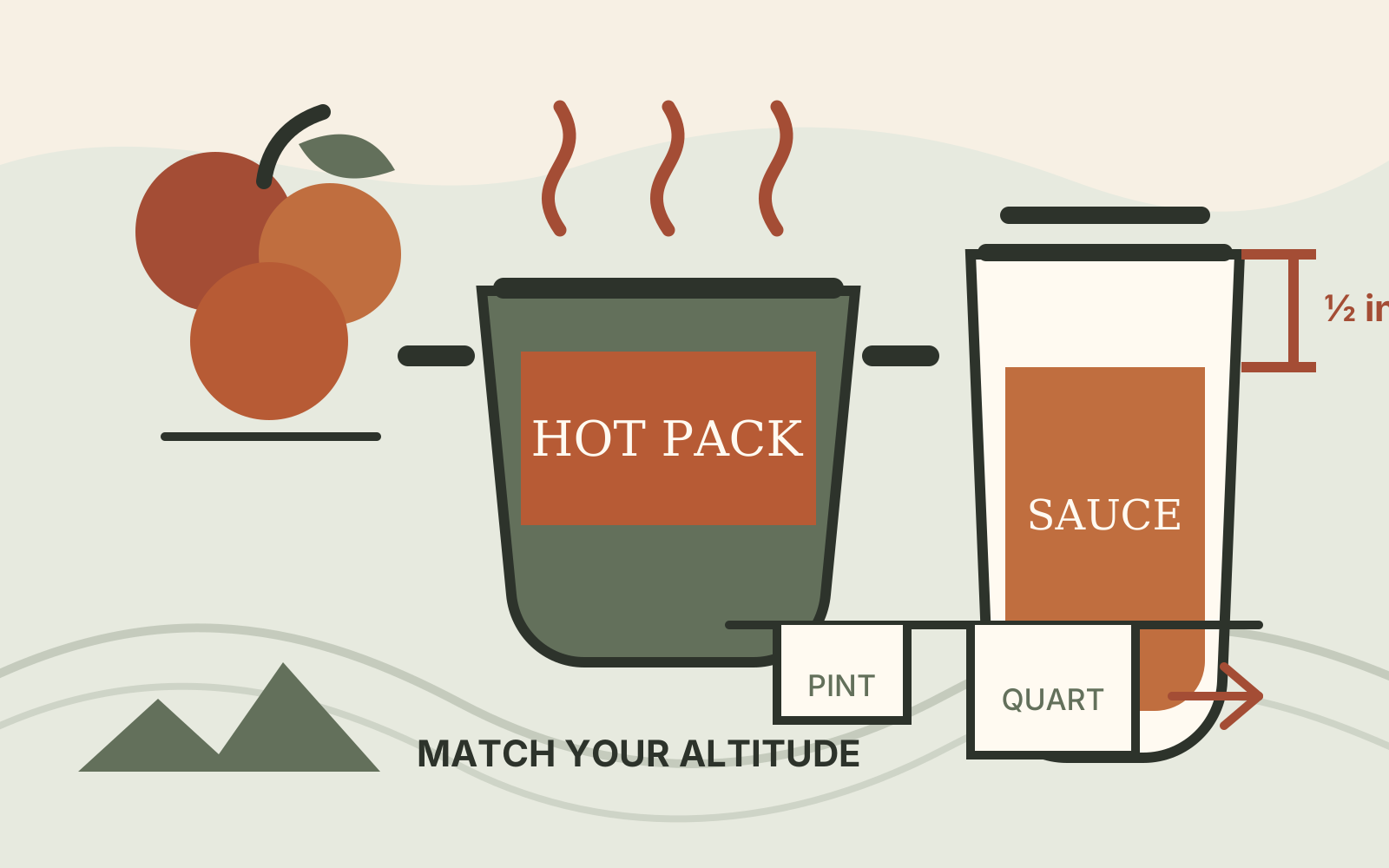
Start with the product you actually plan to preserve
The National Center for Home Food Preservation has a tested applesauce process that covers peeled, cored apples cooked until tender. The cooked fruit may be pressed through a sieve or food mill for smooth sauce, or the pressing step may be skipped for chunk-style sauce. That flexibility is written into the procedure. It does not mean every apple purée, baby-food blend or fruit mixture can use the same process.
Use the applesauce source for applesauce. If you add another fruit, thicken the sauce, or follow a recipe with a different formulation, return to the tested source for that exact product. Processing tables are attached to a particular food, preparation and jar size. They are not universal schedules for anything that looks like sauce.
Choose sound apples that are sweet, juicy and crisp. NCHFP suggests blending some tart apples with sweeter fruit when you want a brighter flavor. Variety and maturity change yield, moisture and taste, so the published quantity is a planning estimate rather than a promise that every basket will fill the same number of jars.
Yes, the NCHFP applesauce may be canned without sugar
The current NCHFP procedure says the sauce may be packed without sugar. If sugar is wanted, it lists an optional starting amount per quart of sauce and says to taste and add more if preferred. Penn State Extension likewise describes sugar as a flavor ingredient in applesauce, not the step that makes this tested process safe.
That distinction matters because sugar plays different roles in different preserves. A traditional jam recipe may rely on a precise balance of fruit, sugar, acid and pectin to form a gel. Applesauce is not that product. Do not generalize the applesauce allowance to jam, jelly, pickle or an untested spread.
For a no-added-sugar batch, sweetness begins with the apples. Taste the cooked sauce before filling jars. If you want a tabletop sweetener, Penn State notes that some sweeteners change flavor during processing; adding one after opening avoids committing the entire batch to a cooked flavor you may not like. Anyone preserving for a medically restricted diet should also check the ingredient choice with an appropriate clinician or dietitian.
The half cup of water is for the pot, not each pound of apples
A recurring reader question asks how to scale the NCHFP instruction to add ½ cup water when the same paragraph does not attach that amount to a certain number of pounds. The published procedure places drained apple slices in an 8- to 10-quart pot, adds ½ cup water and heats them quickly until tender, stirring to prevent burning. The water gets the batch started while the apples release their own juice.
Do not multiply that ½ cup by the pounds of apples. Work in a suitable pot, stir carefully and avoid scorching. Very dry fruit may behave differently from juicy fruit, which is another reason to cook manageable batches instead of forcing an entire canner load into an overcrowded pot.
Reheat the finished sauce to boiling
After you choose a smooth or chunky texture and make any allowed sugar adjustment, the NCHFP procedure calls for reheating the sauce to boiling. The sauce goes into jars hot. Filling hot sauce and then processing it is different from pouring hot sauce into jars, closing the lids and stopping there.
Open-kettle canning, sometimes called hot-fill or inversion canning, skips the canner process. Penn State Extension specifically says that method is no longer recommended for applesauce. A lid may pull down as a hot jar cools, but the vacuum does not prove that the filled jar received the tested heat process.
Keep the sauce gently boiling while you fill, and work at a pace that keeps both the product and jars within the tested hot-pack procedure. Follow current instructions for preparing jars and lids. Avoid using an oven, dishwasher cycle or a decorative jar as a substitute for an approved canning setup.
Texture, trapped air and siphoning
Applesauce can trap a surprising amount of air, especially after a food mill, processor or blender works air into the purée. Penn State advises returning the finished sauce to a boil and maintaining a gentle boil while filling. It also advises removing bubbles with a suitable nonmetallic bubble tool and preserving the full ½-inch headspace.
Headspace is the empty distance between the food and the rim. Measure it rather than estimating from a decorative feature on the jar. Too little space leaves less room for the sauce to expand during processing. Thick sauce and trapped air can also contribute to product pushing out of the jar, known as siphoning.
Siphoning does not have one automatic answer. After the full, undisturbed cooling period, assess the seal and the amount of product lost using current Extension or NCHFP guidance. Food on the outside can make a lid appear stuck even when a dependable vacuum seal did not form. Do not tighten bands, press lids or move hot jars around to try to stop leaking; those actions can interfere with the seal.
Prevention begins before the lid goes on: use the tested consistency, drive excess air from the hot sauce, release visible bubbles, measure headspace and follow the canner's heating and cooling directions. Abrupt temperature changes and rushing the end of a canner cycle can make product loss worse.
Pints and quarts do not share one processing time
The NCHFP boiling-water table lists separate times for pints and quarts, and both times rise across elevation bands. At 0 to 1,000 feet, for example, the listed boiling-water process is 15 minutes for pints and 20 minutes for quarts. At higher elevations, the table requires more time. Read the row for the jar you are actually using and the column for your elevation.
A recipe tested only in pints does not automatically authorize quarts. A larger jar heats differently, so you cannot simply double a pint time, copy a quart time from another formula or choose the longer-looking number from a different book. The NCHFP applesauce page itself provides tested pint and quart options; use that table when following that procedure.
Half-gallon jars are not listed in the NCHFP applesauce table. Do not invent a process for them. If a pot is too shallow to maintain the required water coverage and boil with quart jars, use pints or a taller suitable canner instead of reducing the water level.
Altitude belongs in the plan, not at the end
Water boils at a lower temperature as elevation rises. Boiling-water processes compensate by adding time. Pressure-canning tables compensate through the tested combination of pressure and time, and the adjustment depends on whether the gauge is dial or weighted. Guessing your altitude from a town name or postal code can put you in the wrong band when terrain changes across a county.
Find the elevation of the kitchen where the canner will run, then mark the correct row or column before preparing fruit. Our altitude guide explains the principle and points to elevation tools. If you move the canner to another property, cabin or community kitchen, check again.
NCHFP publishes both boiling-water and pressure-canner schedules for applesauce. Choose one complete method and follow its table and operating instructions. Do not mix the pressure from one table with the time from another, and do not treat a pressure canner as a shortcut unless you understand and follow the listed process for its gauge type.
Build a batch card before apple day
Write down the source URL, date accessed, apple varieties, intended texture, jar size, kitchen elevation and chosen canner method. Copy the correct time or pressure only after matching all of those fields against the current table. A simple batch card prevents the common mid-process scramble between a phone, sticky hands and several nearly identical numbers.
Record the actual yield and any quality observations after the jars cool. A blend that tastes balanced fresh may seem different after processing. Notes about texture, browning, siphoning and the amount of optional sugar help you improve the next batch without changing the tested safety controls.
After cooling, use the full procedure for checking seals, labeling and storing jars. Label with the product and processing date. Store only sound, sealed jars under recommended conditions, and refrigerate the contents after opening.
If the batch did not follow the tested method
A seal does not repair a missed processing step, wrong jar size or unadjusted high-altitude process. Do not taste a questionable jar to decide whether it is safe. If you notice the error within the short reprocessing window described by NCHFP, consult the current directions immediately; the product generally has to be emptied, reheated and packed with new lids, and quality may decline.
If the timing is uncertain, the jar has been stored, or you cannot establish exactly what happened, contact your local Extension food-preservation program. Keep suspect jars closed and away from children and pets while you obtain disposal guidance. Visible mold, an unsealed lid, leakage, spurting liquid or an off odor are discard signals, but a normal appearance cannot validate an untested process.
Sources checked
- National Center for Home Food Preservation: Applesauce
- Penn State Extension: Ways with Applesauce
- Penn State Extension: Preserving Fall Apples
- Oregon State University Extension: Preserving for Special Diets
Reviewed October 6, 2026. Always reopen the current tested recipe before processing; recommendations and source pages can be revised.